
𝐃𝐚𝐦𝐨𝐜𝐨 𝐮𝐫𝐠𝐞𝐬 𝐮𝐧𝐢𝐯𝐞𝐫𝐬𝐢𝐭𝐢𝐞𝐬 𝐭𝐨 𝐩𝐮𝐭 𝐩𝐞𝐨𝐩𝐥𝐞 𝐚𝐭 𝐭𝐡𝐞 𝐡𝐞𝐚𝐫𝐭 𝐨𝐟 𝐝𝐢𝐠𝐢𝐭𝐚𝐥 𝐭𝐫𝐚𝐧𝐬𝐟𝐨𝐫𝐦𝐚𝐭𝐢𝐨𝐧 𝐚𝐭 𝐭𝐡𝐞 𝐏𝐑𝐈𝐂𝐄 2026
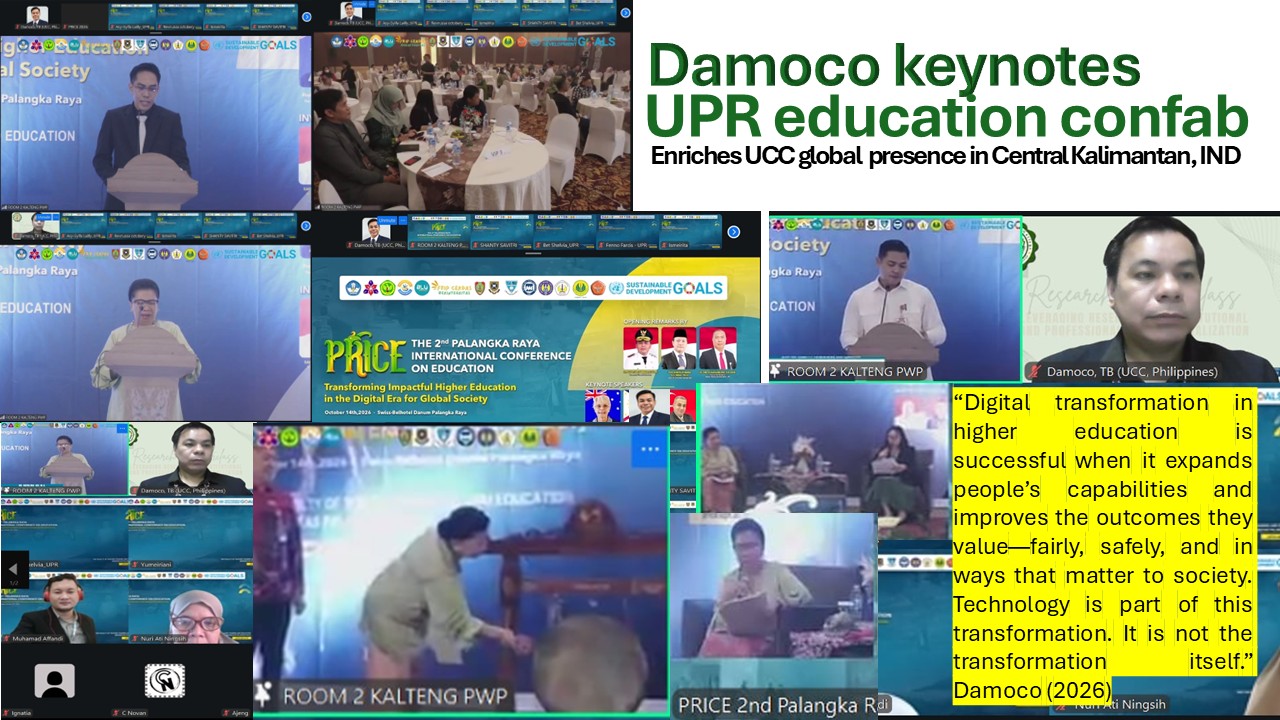
Teofilo Damoco, director of the Center for Research, Innovations, Marketing, and Publication (CRIMP), joined other educators from Australia, Turkey, and Indonesia to keynote the 2nd Palangka Raya International Conference on Education organized by the Universitas Palangka Raya in Central Kalimantan, Indonesia, bearing the theme “Transforming Impactful Higher Education in the Digital Era for the Society.” Joining online due to travel restrictions in the region brought about by the thick forest fire smoke in the region, Mr. called on universities to measure digital transformation by improvements in learning, opportunity, and community impact—not simply by the technologies they adopt. “Digital transformation in higher education is successful when it expands people’s capabilities and improves the outcomes they value—fairly, safely, and in ways that matter to society,” Damoco said. “Technology is part of this transformation. It is not the transformation itself.” He distinguished digitization, which converts information into digital form, from digitalization, which improves existing processes through technology, and digital transformation, which requires institutions to rethink how they teach, conduct research, and serve communities. Drawing on the Philippine experience, Damoco emphasized that unequal connectivity, limited access to devices, and the cost of data can prevent students from benefiting fully from online education. He urged institutions to design these realities through mobile-friendly materials, low-bandwidth options, downloadable resources, accessible formats, and flexible ways to communicate with teachers. He also stressed that access alone does not guarantee meaningful educational benefits. Digital capability must be taught explicitly, including the ability to find reliable information, evaluate evidence, recognize bias, protect privacy, and use information ethically. Educators, in turn, need sustained support to develop collaborative teaching practices and create accessible learning materials. Damoco outlined four priorities for universities: ensure equitable participation; strengthen the digital capabilities of learners and educators; redesign learning around inquiry, feedback, and meaningful intellectual work; and measure outcomes beyond login, attendance, and course completion. He urged institutions to examine differences across learner groups so that overall progress does not conceal continuing exclusion. On artificial intelligence, he advocated purposeful use grounded in critical thinking, ethical practice, and clear institutional guidance. While AI can support idea generation, translation, practice, and feedback, he cautioned that it can also reproduce bias, generate fabricated information, and expose sensitive data. “The goal should not be to make every student or educator dependent on a tool,” he said. “It should be to build human agency: the ability to question a system, check its output, make a reasoned decision, and take responsibility for how a tool is used.” The keynote also called for inclusive internationalization through virtual exchanges, shared research, and curricula that expose students to diverse perspectives. Damoco suggested that Philippine institutions and universities in Central Kalimantan could collaborate on locally grounded questions involving climate risks, the preservation of local knowledge, public health information, and rural digital access. Such partnerships, he emphasized, should recognize each institution’s expertise and produce benefits for the communities involved. Closing his address, Damoco invited colleagues 𝒕𝒐 𝒃𝒖𝒊𝒍𝒅 𝒉𝒊𝒈𝒉𝒆𝒓 𝒆𝒅𝒖𝒄𝒂𝒕𝒊𝒐𝒏 𝒕𝒉𝒂𝒕 𝒊𝒔 “𝒄𝒓𝒊𝒕𝒊𝒄𝒂𝒍, 𝒊𝒏𝒄𝒍𝒖𝒔𝒊𝒗𝒆, 𝒍𝒐𝒄𝒂𝒍𝒍𝒚 𝒓𝒆𝒍𝒆𝒗𝒂𝒏𝒕, 𝒂𝒏𝒅 𝒈𝒆𝒏𝒆𝒓𝒐𝒖𝒔 𝒊𝒏 𝒊𝒕𝒔 𝒄𝒐𝒏𝒕𝒓𝒊𝒃𝒖𝒕𝒊𝒐𝒏 𝒕𝒐 𝒔𝒐𝒄𝒊𝒆𝒕𝒚”—𝒂 𝒗𝒊𝒔𝒊𝒐𝒏 𝒊𝒏 𝒘𝒉𝒊𝒄𝒉 𝒅𝒊𝒈𝒊𝒕𝒂𝒍 𝒊𝒏𝒏𝒐𝒗𝒂𝒕𝒊𝒐𝒏 𝒊𝒔 𝒋𝒖𝒅𝒈𝒆𝒅 𝒃𝒚 𝒕𝒉𝒆 𝒉𝒖𝒎𝒂𝒏 𝒑𝒖𝒓𝒑𝒐𝒔𝒆 𝒊𝒕 𝒔𝒆𝒓𝒗𝒆𝒔. Along with his address, Mr. Damoco extended UCC’s greetings and commendation to the University of Palangka Raya for designing and organizing the conference, which invites deeper thinking and reflections that can guide universities toward more inclusive, impactful, and socially responsive higher education in the digital era. #UCC #UnionChristianCollege #LongLiveTheUCCSpirit #WholePersonEducation #UCCGlobalEngagement #PRICE2026 #DigitalTransformation #InclusiveEducation #ResponsibleAI #InternationalCollaboration #SustainableDevelopmentGoals #SDG4QualityEducation #SDG9IndustryInnovationandInfrastructure #SDG10ReducedInequalities #SDG17Partnershipforgoals
1 views